Gothenburg, November
Harbour light, library hours and the particular hush of a northern autumn.
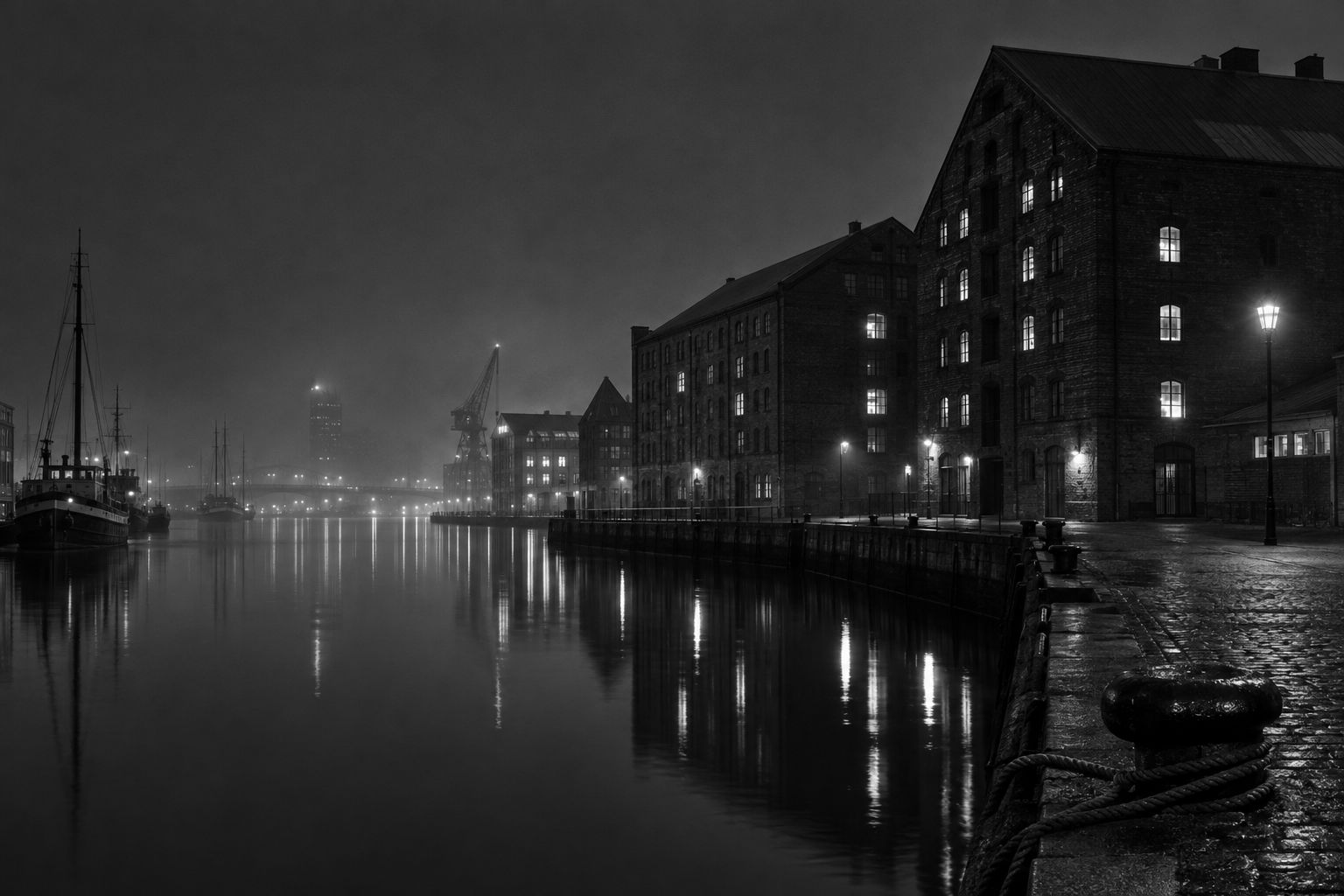
By the middle of November the light in Gothenburg goes early. It thins out over the river sometime after three, turns the colour of weak tea, and by four the lamps along the quays are doing all the work. People who move here from the south tend to dread this. People who grew up here have mostly made their peace with it, and some of them, if you press, will admit they like it best of all.
The city is built for this season in ways that are easy to miss in summer. The trams keep running in their blue and white, warm inside, windows fogged. The cafés in Haga light candles at lunchtime without irony. Every second window in the apartment blocks along Linnégatan has a lamp on the sill, a habit so common that a dark window starts to look like a small act of rudeness.
Down by the water
The harbour is the best place to feel the change. In August the quays are crowded with people eating shrimp sandwiches and watching the ferries. In November you can walk from Lilla Bommen to Stigbergstorget and meet perhaps a dozen people, most of them with dogs. The water goes flat and black. The old gantry crane at Eriksberg stands over the far bank like the skeleton of something that used to be enormous, which in a sense it is.
The city keeps its lamps on through the afternoon, and nobody thinks it strange.
Feskekôrka, the fish market built in 1874 to look like a church, is at its most convincing on these afternoons. The tall windows glow, the stalls are piled with cod and crayfish and smoked eel, and the whole building has the hushed, slightly damp atmosphere of a place of worship whose congregation has come to buy dinner.
Up at Götaplatsen
At the top of Avenyn the square at Götaplatsen holds the city's cultural buildings in a loose semicircle. The art museum, the concert hall, the theatre. Carl Milles's Poseidon stands in the fountain in front of them, naked and enormous, holding a fish and looking faintly annoyed at the weather. He has been there since 1931 and has never once been dressed for the season.
Just off the square is the city library, Stadsbiblioteket, and on a November evening it is one of the most civilised rooms in Sweden. Students spread out across the long tables. Older readers settle into the armchairs by the windows with the newspapers. Someone is always asleep. The building stays open late enough that you can go in when it is already dark and come out when it is darker, having spent a few hours in good light among people who have chosen, like you, to be indoors with a book.
The hush
There is a word people use here, mys, for the comfortable warmth of being inside when it is cold and dark outside. It gets sold to tourists now, in candles and blankets and cookbooks. The real thing is harder to package. It is the sound of the tram bell through a closed window, the smell of cardamom from a bakery in Majorna, the sense that the whole city has drawn in a little closer and lowered its voice.
For a reader it is a gift. The evenings are long, the distractions few, and there is no pressure to be outside making the most of anything. You can stay in with a novel from four in the afternoon and feel, for once, entirely in step with the place you live.
The brochures prefer June. November may tell you more about the city.